3 Most Important Violin Pedagogues of All Time
Every music teacher had a music teacher, and those music teachers also had music teachers, a lineage that goes back for generations in every instrument. Many charts and "family trees," so to speak, have been published showing the interwoven tapestry of famous violinists and how they influenced one another, but is it possible to narrow down the most pivotal pedagogues in all of violin history? Many names may come to mind: Antonio Vivaldi, Leopold Mozart, Carl Flesch, Shinichi Suzuki, Dorothy Delay, the list goes on. All of these left a measurable impact on violin technique and those who enact it in their respective eras, yet there are three in particular that this blogger would argue drastically changed and largely defined how the violin was played for at least a century each.
Arcangelo Corelli (1653-1713)
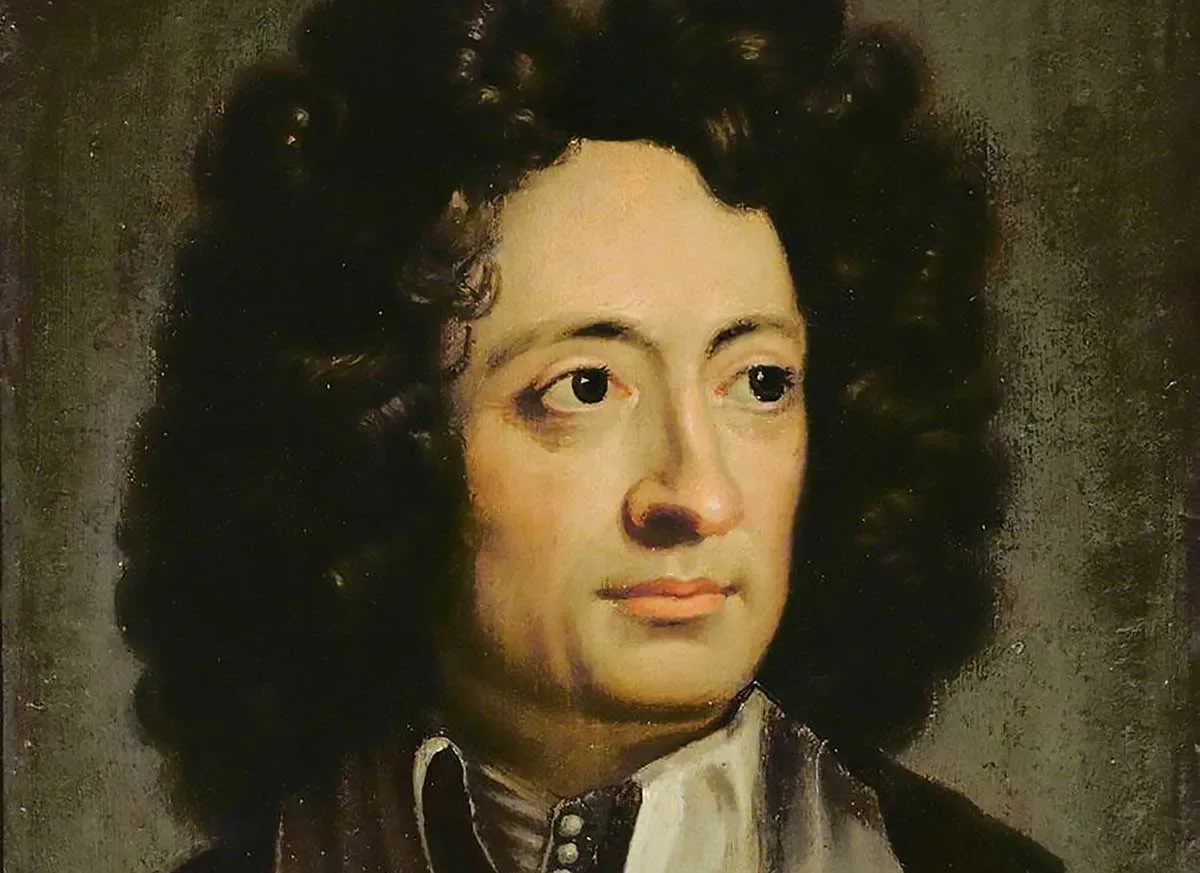
Students: Geminiani, Somis, maybe Locatelli
Aspects of playing: flattering technique, sweet sound like a human voice full of expression, sustained sound on multiple strings for at least ten seconds, could be an argument that this sustained quality of sound inspired the technological shift to the Tourte model of bow
Impact: his reputation drew musicians from all over Europe, who observed his performances and brought his influence back to every corner of the continent. His students would go on to be some of the most important virtuosos and pedagogues. In particular, Geminiani had a massive influence on violin education with his treatise The Art of Playing on the Violin, Op. 9. Another student of Corelli's, Giovanni Battista Somis, also became famous for continuing the highly expressive playing style that Corelli was known for. He taught the likes of Pugnani and Leclair, who would continue on this tradition of expressive playing in Italy and France, respectively. Pugnani became the mentor of Giovanni Batista Viotti, who collaborated with François Tourte in the invention of the modern string bow model. This model, three generations of violinists after Corelli, finally made possible so many of the ideals of which Corelli pursued in his own playing - sustain, extended double and triple stop technique, and extremely accurate bounce of the bow both on one string (sautillé/spiccato) or across many strings (barriolage). Meanwhile, Locatelli would expand on barriolage and other virtuosic techniques of Corelli in his L'arte del violino, a key inspiration for Paganini's 24 Caprices. Corelli's lineage continued into the 19th century, and the emphasis put on expressiveness and mimicking the human voice was still being highlighted by the likes of Louis Spohr.
Joseph Böhm (1795-1876)
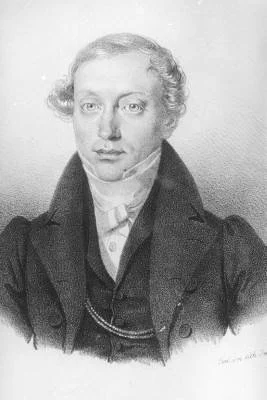
Students: Joseph Joachim, Jenö Hubay, Heinrich Ernst, Jakob Dont (taught Auer), Eduard Reményi, Jacob Grün (taught Flesch), Hellmesberger Sr., Edmund Singer
Aspects of playing: pure tone, soulful, delicate, with no interruption even in passages of great bravura, specificity in bow stroke to emphasize phrasing, and variety of emotion. Moser, in his biography of Joachim, attributed Böhm with the following: "giving to each bowing its distinctive individuality; the absolute repose in his manner of drawing a long note; the incisiveness and pith of his half-bow; his spiccato, in all its shades, from 'snow and rain to hail'; his equality of tone in all parts of the finger-board..."
Impact: Locally, Böhm essentially defined the sound of the Vienna Philharmonic strings through the end of the Mahler era. He worked closely with Beethoven as a quartet musician and was also part of the orchestra that premiered the 9th Symphony. He was a champion of chamber music by Franz Schubert, which many others of the era overlooked. Via Beethoven, Böhm carried the unique sentiment that the score itself holds character and meaning to be evoked by the performer, rather than being a purely suggestive document as had been thought do for well over a century. Böhm taught his students that they were not meant to treat the score as a "mere recipe for a performance," but instead as an "'art work of ideas' [that transcends] its various interpretations," as described by Carl Dahlhaus.
These philosophies and techniques would go on to all corners of the globe. Böhm's studio in Vienna became a safe harbor for a class of Jewish and largely Hungarian students. As politics shifted, and despite ongoing anti-semitism, the 1840s-50s allowed for a flourishing class of Jewish musicians to enter the European circuit, which, especially in Austria and Germany, had been difficult if not impossible. These violinists would go on to produce all the greatest violin studios in Europe and America. Joachim would teach in Berlin, Jakob Grün would supersede Böhm as professor in Vienna (where he would also teach Carl Flesch), Jakob Dont, who in turn taught Leopold Auer (the founder of the Russian school of violin in St. Petersburg), and Jenö Hubay, who would teach prodigiously in Budapest. He also taught many of the finest and most important violinists in Europe, including Heinrich Ernst (a toe-to-toe rival of Paganini), Eduard Reményi, Edmund Singer (concertmaster in Weimar), and Hellemsberger Sr. (concertmaster in Vienna).
Ivan Galamian (1903-1981)
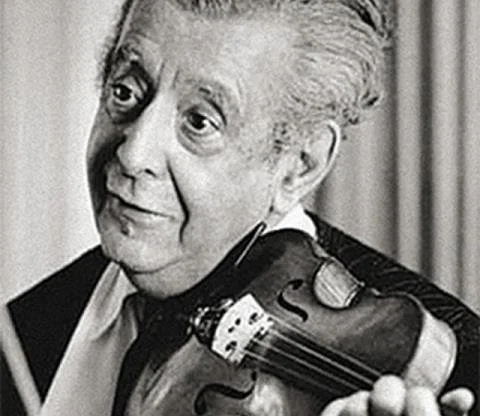
Students: Itzhak Perlman, Kyung Wha Chung, Dorothy Delay, Sally Thomas, Pinchas Zukerman, Donald Weilerstein, David Nadien, Glenn Dicterow, Miriam Fried, Michael Rabin
Aspects of Playing: emphasis on consistency and longevity. One of the first major 20th century pedagogues to take from the Russian and French schools of violin.
Impact: It would not be an exaggeration to say that Galamian's is the primary influence on how the violin was played throughout the latter half of the 20th century and in many ways still today. Much like Böhm, Galamian used teaching assistants to expand his studio's reach, and many of those individuals went on to be hugely prominent violin pedagogues in their own right, most notably Dorothy Delay and Sally Thomas. The branching out of his method and style led to to a modern reality where the majority of violinists today likely have pedagogical ties to Galamian or his studio.
Galamian emphasized consistency of sound and intonation, achieved by dedicated practice of scales and solo Bach. It is also Galamian's edition of Bach Sonatas and Partitas that was most influential on the performance of these works for nearly half a century. Through Galamian's scale method, students focused on coordination and physical dexterity, theoretically extending the lifetime of musicians' careers - an important progression in helping more everyday professional musicians (freelancers and orchestral musicians, especially) commit more time to their instruments, making it a more economically viable career.